
If you're using Cargo to showcase your portfolio or run an online store, Google Analytics can provide you with invaluable insights into traffic and user engagement. While Cargo's built-in stats offer a glimpse into your site's performance, Google Analytics allows much deeper analysis.
Here is how to integrate Google Analytics with Cargo, step by step. Let's dive in!
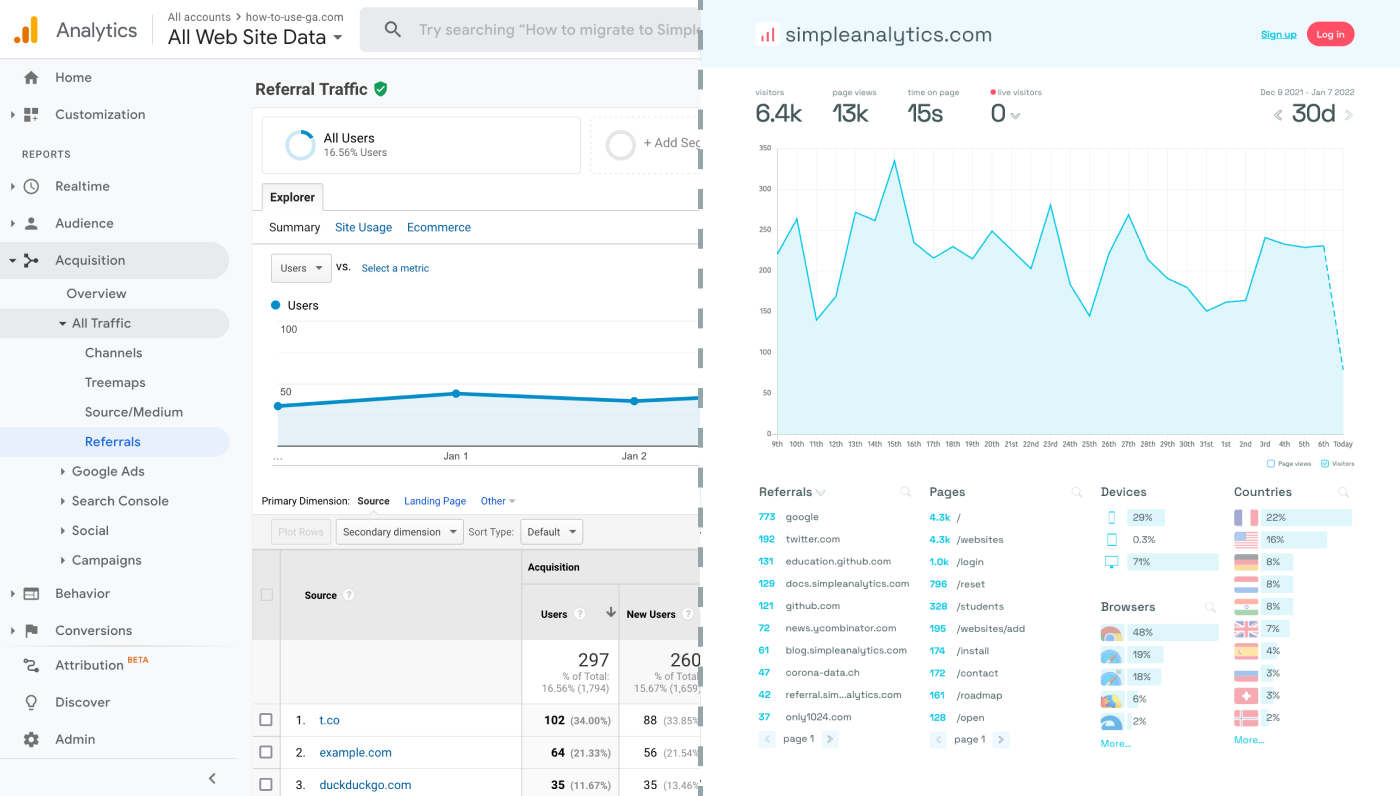
Before we dig in you need to know that Google Analytics is complex and a bit clunky. There are other options that give you the same insights in a slick and straightforward dashboard.
Simple Analytics is one of them. A privacy-friendly and simple analytics tool - just the insights you need in a straightforward dashboard. (And its also free yes).
All right, now let's get into answering your question!
Set Up Google Analytics
First things first, you need to have a Google Analytics account and a GA property for your website. If you're starting from scratch, here's a quick overview:
- Visit Google Analytics: Go to the Google Analytics website and sign in with your Google account. If you don’t have an account, you'll need to create one.
- Create a New Property: Follow the on-screen prompts to create a new property. Select "Web" as the platform and enter your website's details.
- Obtain Your Measurement ID: Once your property is set up, Google Analytics will provide you with a Measurement ID (formatted as "G-XXXXXXXXXX"). Note this ID, as it will be needed for integrating GA with your Cargo site.
Integrate Google Analytics with Cargo
Cargo makes it straightforward to integrate third-party services like Google Analytics. Here’s how to add your GA Measurement ID to your Cargo site:
- Log Into Cargo: Access your Cargo site's dashboard.
- Navigate to Settings: Look for the settings or configuration section in your dashboard. . Find the Integrations Section: Within settings, locate the section dedicated to analytics and third-party integrations.
- Enter Your Measurement ID: In the analytics or tracking section, you'll find a field for your Google Analytics Measurement ID. Paste your Measurement ID here.
- Save Changes: Make sure to save your changes to finalize the integration. Cargo will now start sending data from your website to Google Analytics.
- (Optional) Create Extra Properties: if you want to track multiple websites, make sure to create new properties and use the correspondent Measurement ID. This prevents GA from conflating the data!
Verify the Integration
After integrating Google Analytics with your Cargo site, it's essential to ensure everything is working correctly:
- Check Realtime Reports: Visit your website, then go to your Google Analytics account and view the Realtime reports. If you see your visit logged there, congratulations, GA is successfully tracking your Cargo site.
- Look for Initial Data: Over the next 24-48 hours, check your GA account for incoming data. You should start seeing reports fill up with information about user behavior on your site.
Final Thoughts
Adding Google Analytics to your online store can give you great insights. However, ask yourself: is Google Analytics the right tool for you?
GA is an overpowered solution for straightforward analytics. If you're looking for a simple and intuitive dashboard with the insights you need, there are better alternatives.
If this resonates with you, feel free to give Simple Analytics a spin. You just need to add the script to your app and off you go. This takes about one minute- and there is a free version as well!
Enjoy!